Unclear listings
Job offers can be vague, misleading or impossible to verify.
A startup concept for trusted freelance hiring, agreements and payments powered by smart contracts.
Freelancers need confidence they will be paid. Clients need confidence that agreed work will be delivered. WorkChain explored how transparent agreements, payment states and mobile-first product flows could reduce risk for both sides.
Job offers can be vague, misleading or impossible to verify.
Expectations and responsibilities are often scattered across conversations.
Delayed or disputed payments erode trust and make the whole platform feel unsafe.
Find relevant work, agree clear terms, complete the project and receive payment automatically.
Create a clear brief, select talent, track delivery and release payment against the agreement.
Empathize
Define
Ideate
Prototype
Test
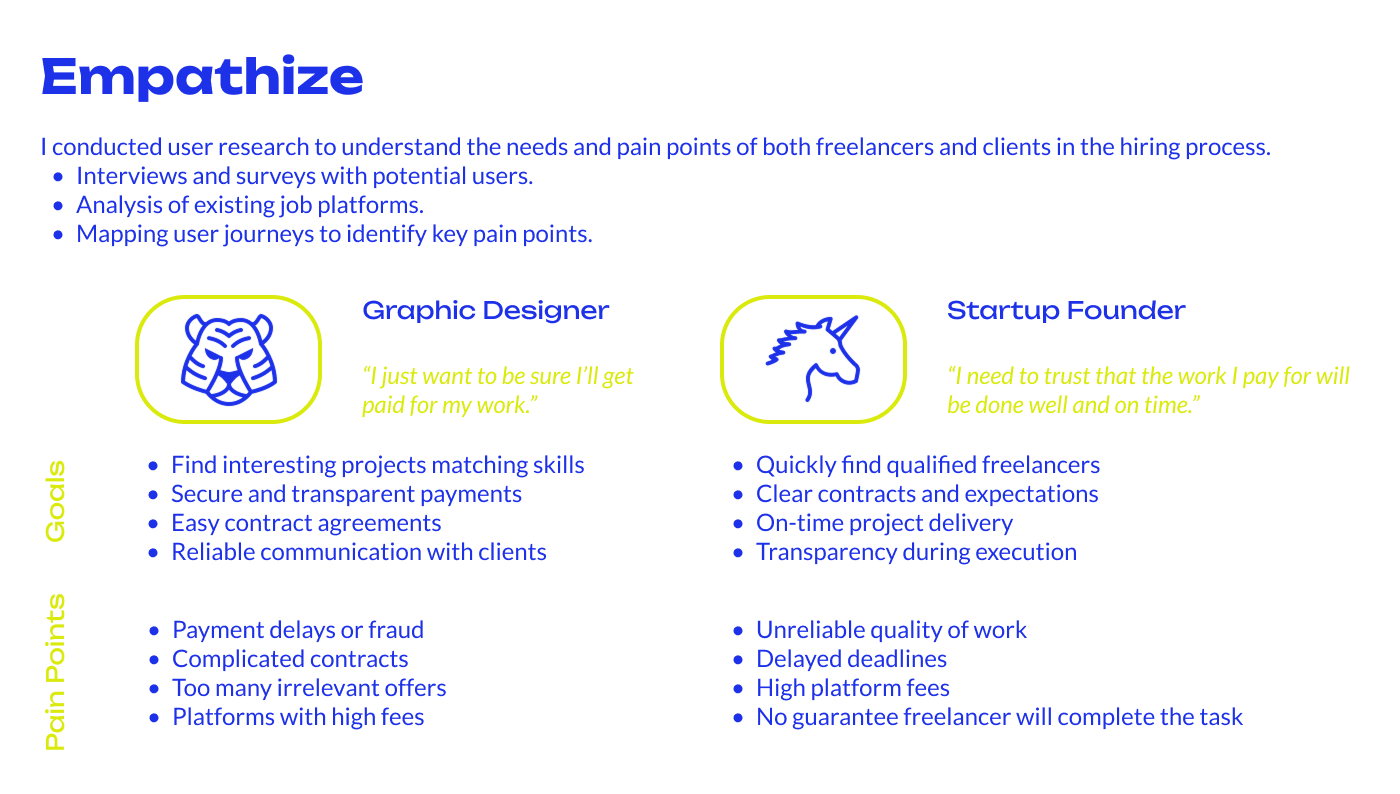
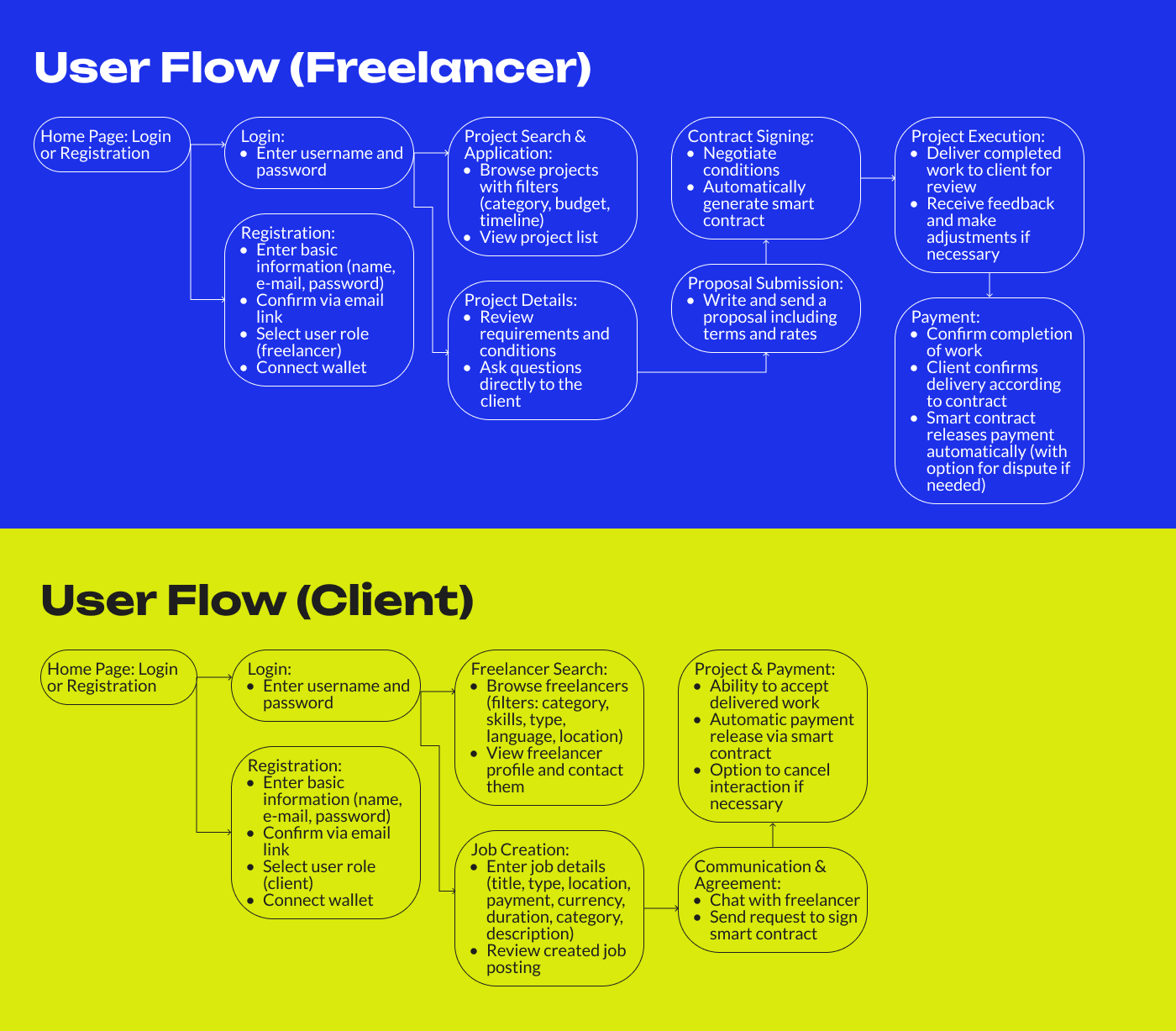
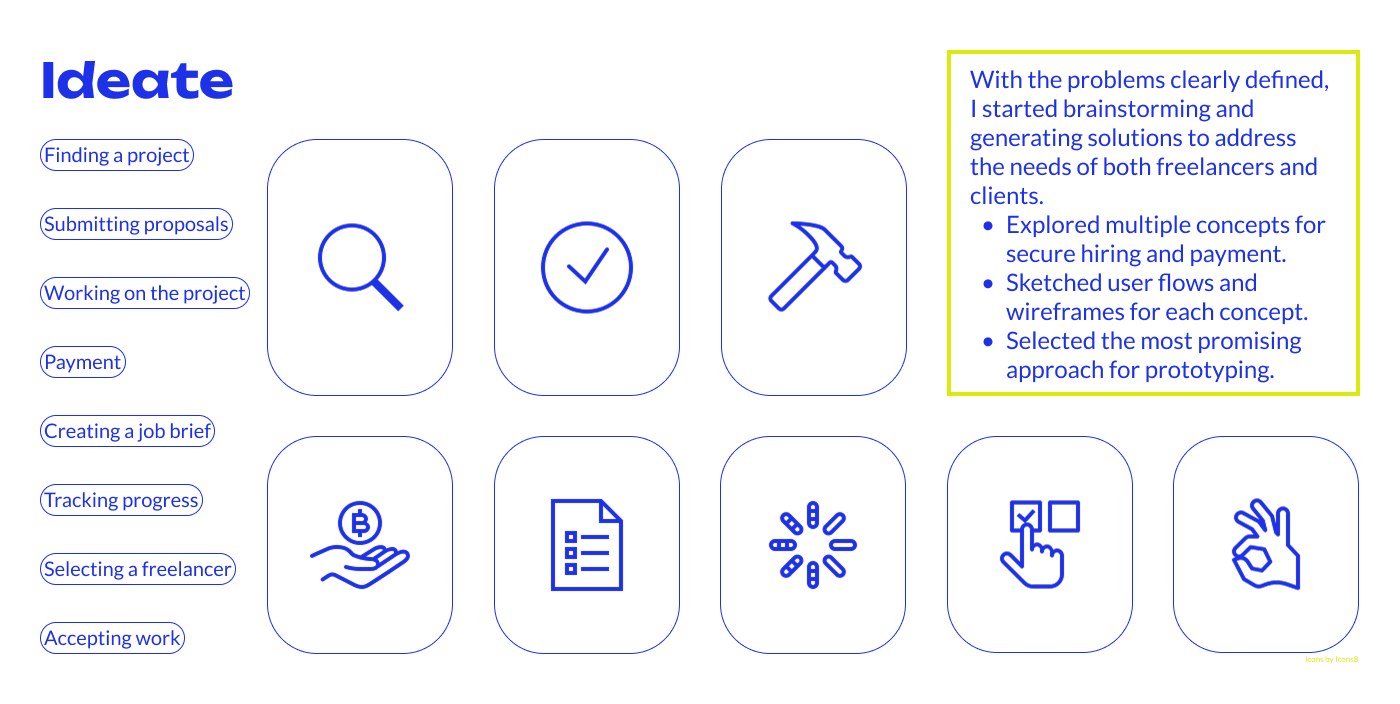
The concept connects discovery, negotiation, delivery and payment into one continuous experience instead of treating them as separate tools.
Match projects and talent through relevant filters.
Turn negotiated conditions into an explicit agreement.
Keep progress and responsibilities visible.
Automate payment when agreed work is accepted.
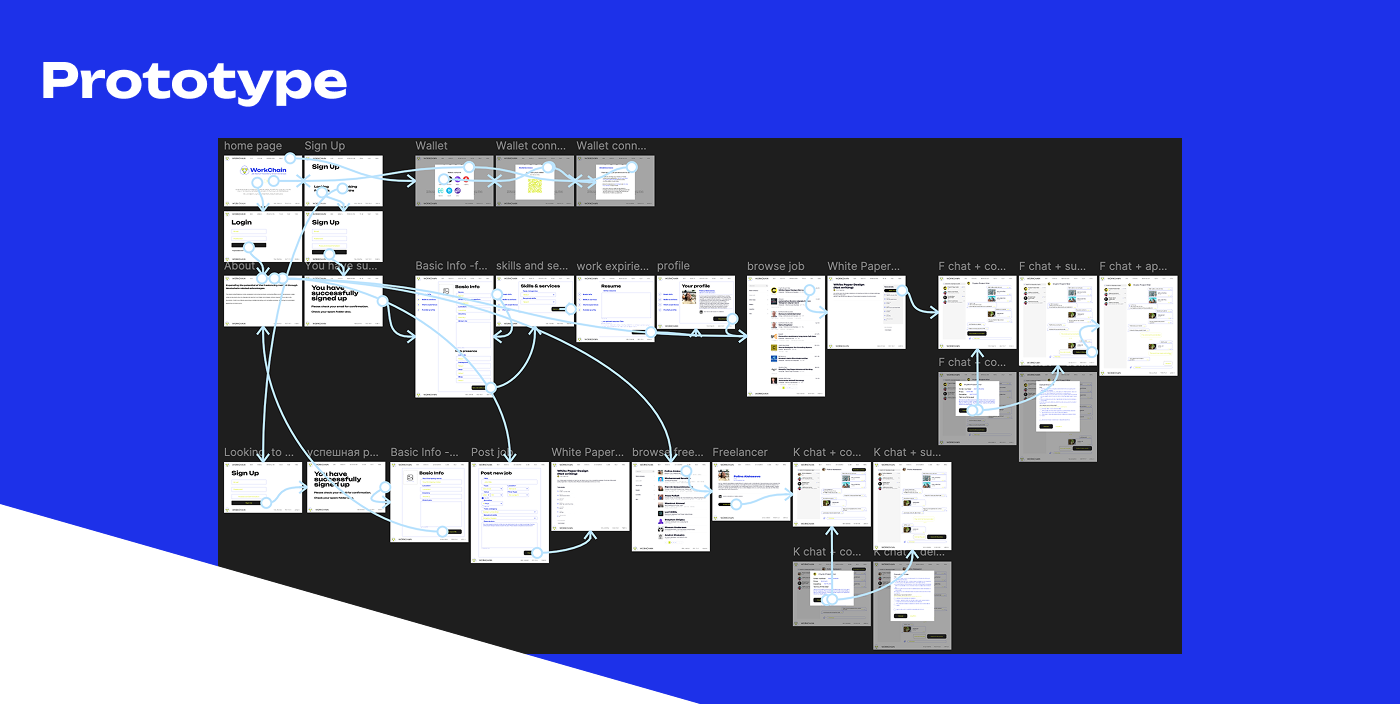
Informal usability checks covered registration, job discovery, contract signing and payment. The core loop was understood without critical blockers; payment trust needed clearer explanation and several navigation refinements were identified.
Core hiring loop understood
Payment trust needed clearer explanation
Navigation refinements identified
Designing WorkChain taught me to treat trust as an interaction, not a claim.
A full-cycle educational platform connecting brand, website, CRM, payments and communication.